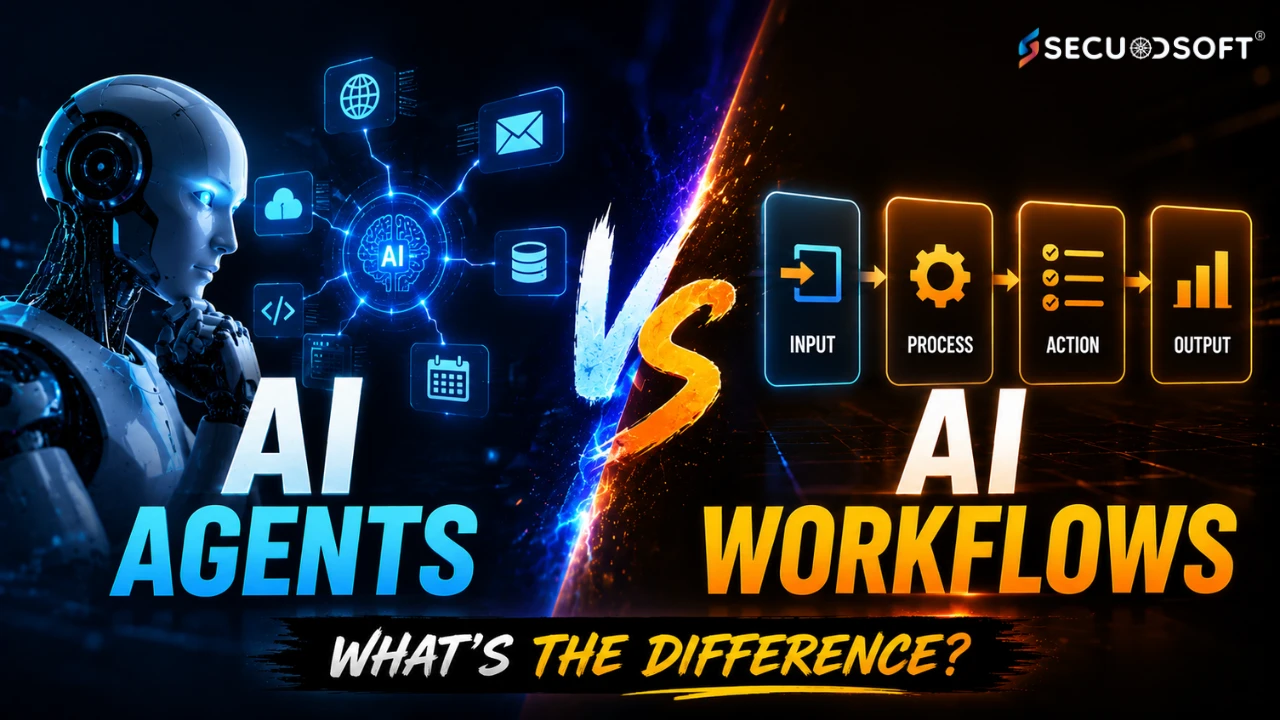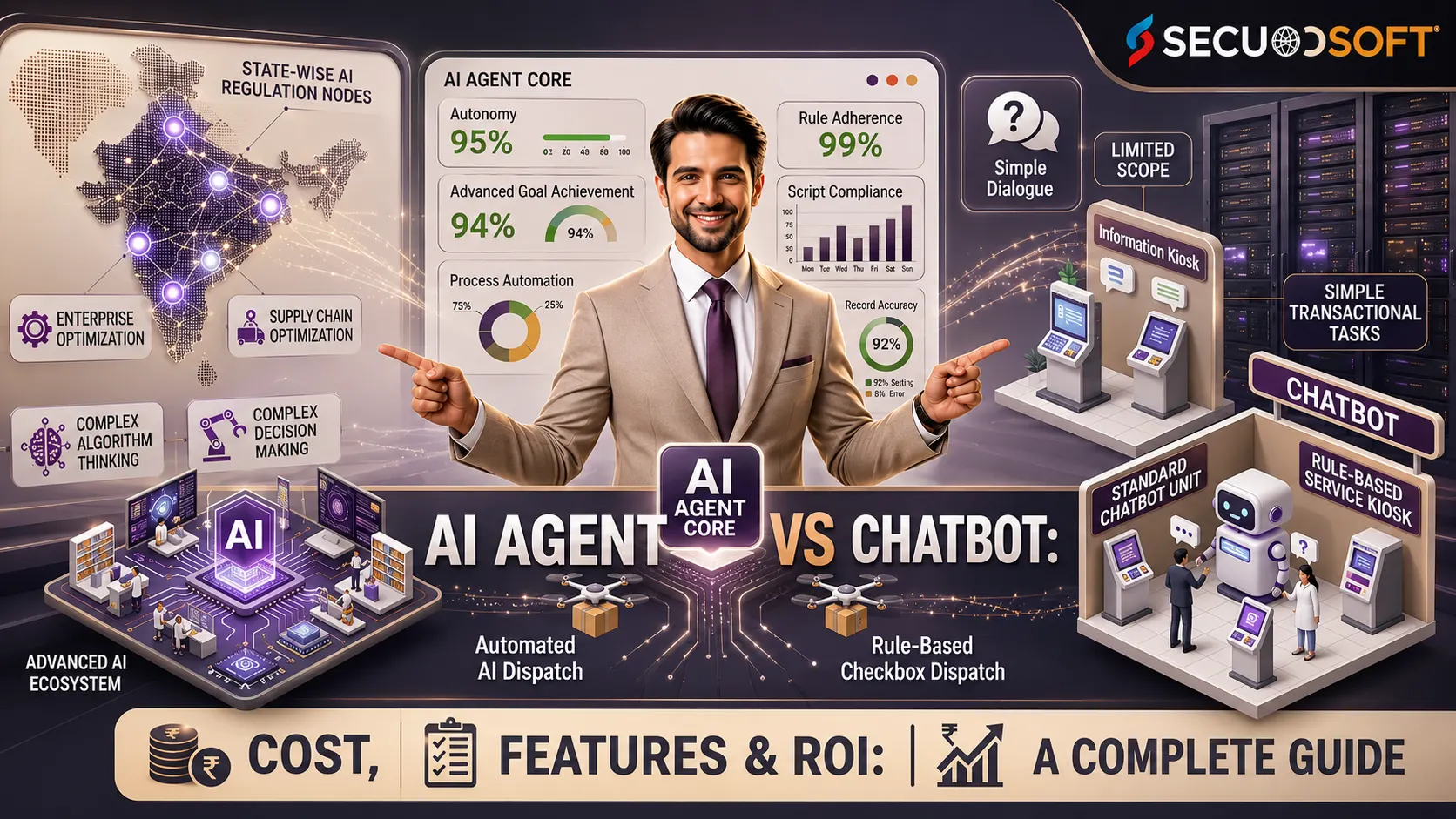
The AI agent revolution is transforming business automation in 2026, with AI agent development enabling companies to deploy autonomous systems handling customer service, sales, operations, and complex decision-making, yet 58% of AI agent projects fail due to poor planning, inadequate training data, or choosing inexperienced developers costing ₹10-40 lakhs in wasted investments. Unlike traditional chatbots that follow scripted responses, modern AI agents powered by GPT-4, Claude, and custom LLMs demonstrate reasoning capabilities, take autonomous actions, use tools dynamically, learn from interactions, and handle multi-step workflows without human intervention. While basic chatbots cost ₹2-5 lakhs, sophisticated autonomous AI agents with tool integration, memory systems, and decision-making capabilities range ₹5-50 lakhs depending on complexity, requiring 2-8 months development by experienced AI agent development companies understanding both AI technology and business workflows.
This comprehensive 2026 guide covers everything Indian businesses need about AI agent development, from understanding agent types (reactive, cognitive, autonomous), essential capabilities (reasoning, planning, tool use), realistic cost breakdowns, technology stacks (LangChain, AutoGPT, CrewAI), implementation processes, and proven strategies for deploying AI agents that deliver 40-70% cost savings through intelligent automation while maintaining quality and reliability.
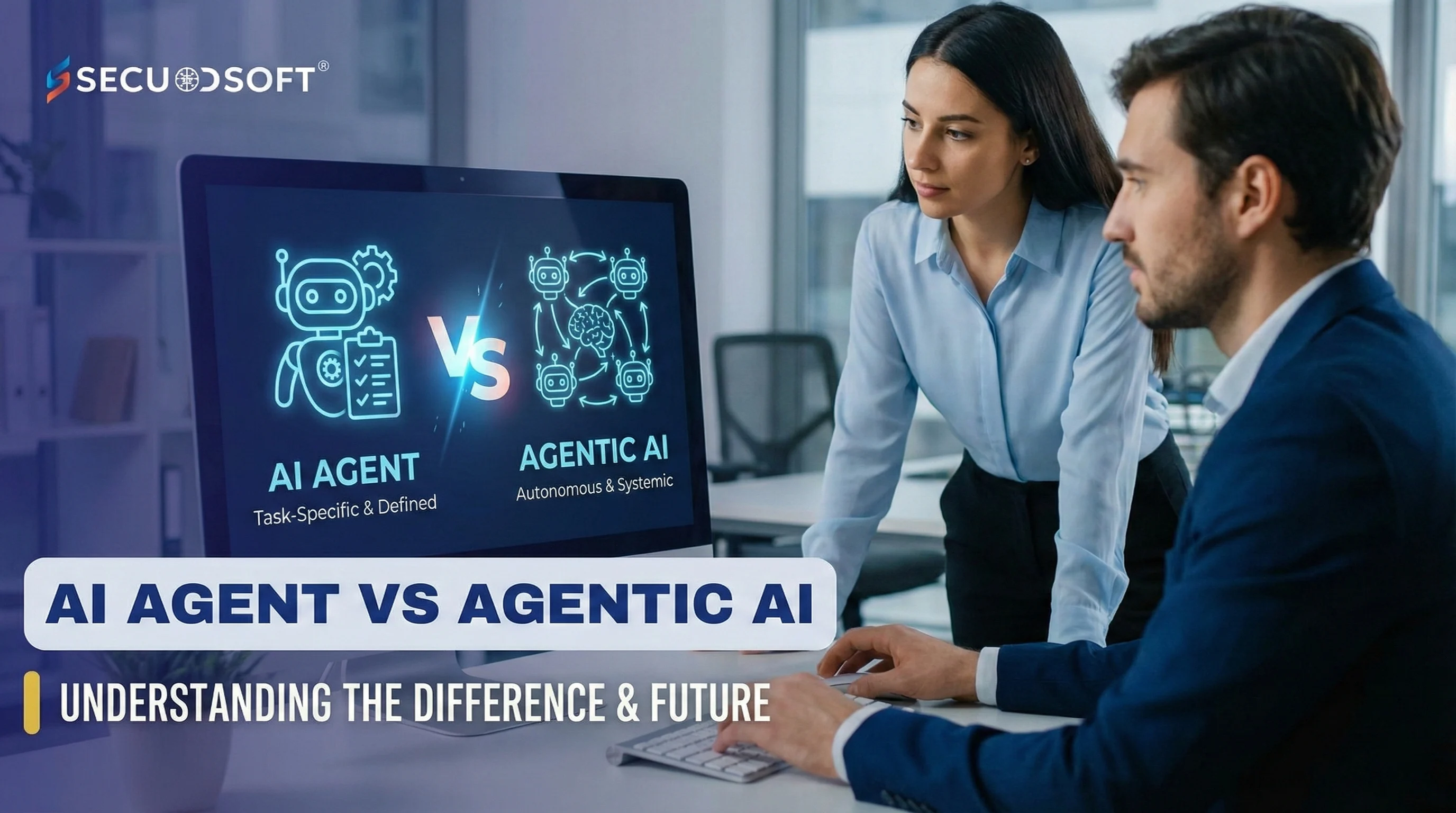
AI agents are autonomous software systems that perceive their environment, make decisions, take actions to achieve specific goals, and learn from outcomes without constant human supervision. Unlike traditional automation following rigid rules, AI agents demonstrate reasoning, adaptability, and decision-making capabilities.
| Feature | Traditional Chatbot | AI Agent |
|---|---|---|
| Intelligence | Rule-based, scripted | Reasoning, autonomous |
| Decision Making | Predefined flows | Dynamic, context-aware |
| Tool Usage | Limited integrations | Uses multiple tools independently |
| Learning | Static knowledge | Learns from interactions |
| Task Complexity | Simple Q&A | Multi-step complex workflows |
| Autonomy | Human-in-the-loop | Autonomous execution |
| Cost | ₹2L - ₹5L | ₹5L - ₹50L |
| Development Time | 1-2 months | 2-8 months |
Purpose: Respond to specific inputs without memory Use Cases: Simple customer queries, data lookup, form filling Cost: ₹5L - ₹12L Examples: FAQ bots, basic automation
Purpose: Understand context, maintain conversation memory Use Cases: Customer service, sales assistance, technical support Cost: ₹10L - ₹25L Examples: Advanced chatbots, virtual assistants
Purpose: Self-directed task completion with minimal supervision Use Cases: Lead qualification, data analysis, content generation Cost: ₹15L - ₹40L Examples: Sales agents, research agents, coding agents
Purpose: Multiple specialized agents collaborating Use Cases: Complex workflows, enterprise automation, decision support Cost: ₹25L - ₹50L+ Examples: Automated workflows, intelligent process automation
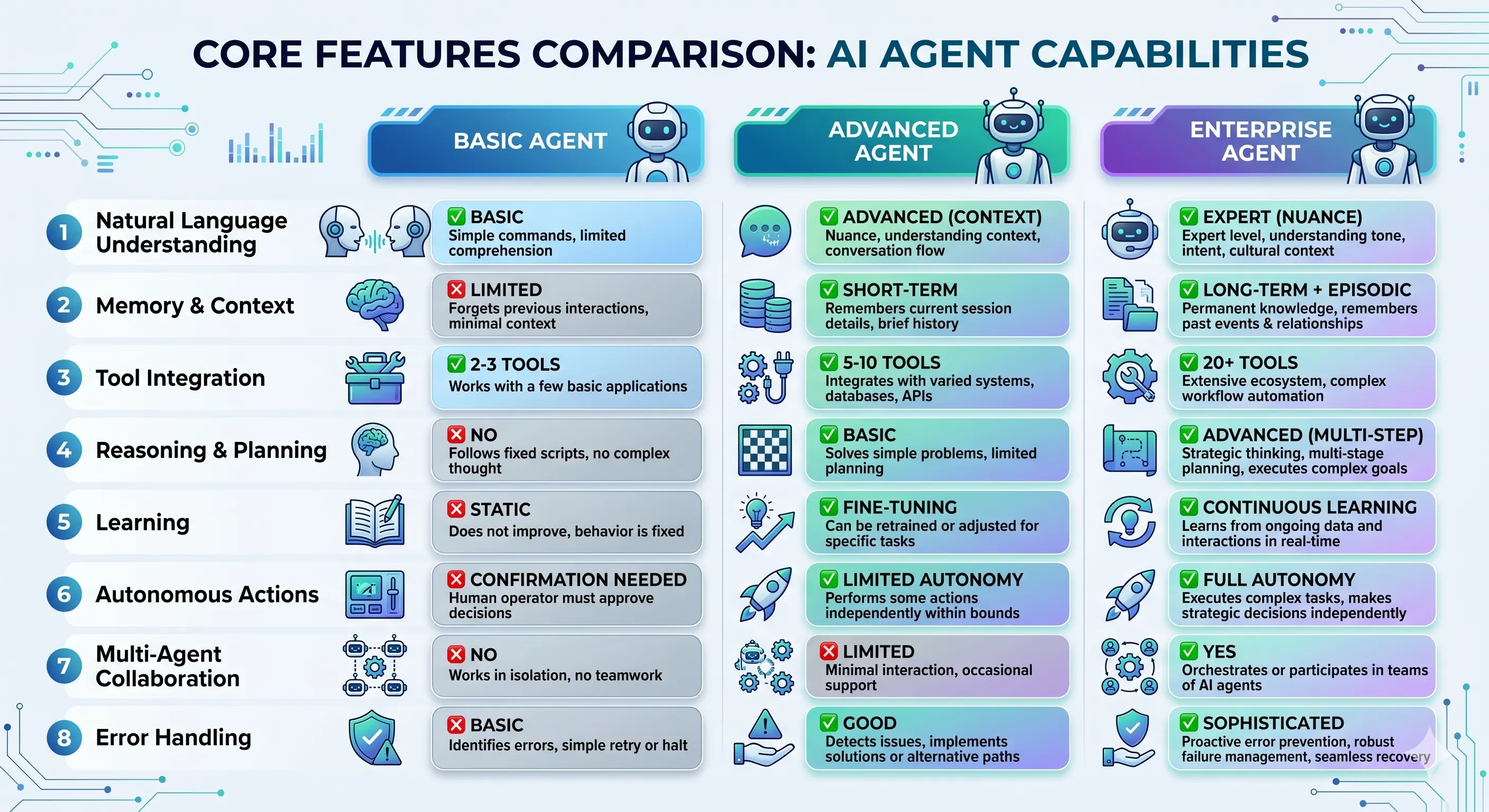
| Capability | Basic Agent | Advanced Agent | Enterprise Agent |
|---|---|---|---|
| Natural Language Understanding | ✔️ Basic | ✔️ Advanced (context) | ✔️ Expert (nuance) |
| Memory & Context | ❌ Limited | ✔️ Short-term | ✔️ Long-term + episodic |
| Tool Integration | ✔️ 2-3 tools | ✔️ 5-10 tools | ✔️ 20+ tools |
| Reasoning & Planning | ❌ No | ✔️ Basic | ✔️ Advanced (multi-step) |
| Learning | ❌ Static | ✔️ Fine-tuning | ✔️ Continuous learning |
| Autonomous Actions | ❌ Confirmation needed | ✔️ Limited autonomy | ✔️ Full autonomy |
| Multi-Agent Collaboration | ❌ No | ❌ Limited | ✔️ Yes |
| Error Handling | ❌ Basic | ✔️ Good | ✔️ Sophisticated |
| Agent Type | Features | Timeline | Cost Range |
|---|---|---|---|
| Basic Reactive | Simple Q&A, API lookup | 1-2 months | ₹5L - ₹12L |
| Cognitive Assistant | Context awareness, memory, 5-10 tools | 2-4 months | ₹10L - ₹25L |
| Autonomous Agent | Self-directed, reasoning, 15+ tools | 4-6 months | ₹15L - ₹40L |
| Multi-Agent System | Specialized agents, collaboration | 6-10 months | ₹25L - ₹50L+ |
Cost: ₹1L - ₹8L
Includes:
| Approach | Description | Cost |
|---|---|---|
| Pre-trained LLM APIs | GPT-4, Claude, Gemini | ₹2L - ₹8L |
| Fine-tuned Models | Custom training on domain data | ₹5L - ₹15L |
| Custom Models | Built from scratch | ₹15L - ₹30L+ |
Cost: ₹3L - ₹20L
Components:
| Integration Type | Cost Range |
|---|---|
| Standard APIs (REST) | ₹30K - ₹1L |
| Database connections | ₹50K - ₹1.5L |
| CRM/ERP systems | ₹1L - ₹4L |
| Custom tools | ₹75K - ₹3L |
| Payment gateways | ₹50K - ₹2L |
| Communication tools | ₹40K - ₹1.5L |
Testing Types:
Cost: ₹50K - ₹4L
Services:
Maintenance: ₹1L - ₹8L/year (15-20% of development) LLM API Costs: ₹50K - ₹10L/year (usage-based) Infrastructure: ₹1L - ₹5L/year Monitoring & Updates: ₹75K - ₹4L/year
| Component | Cost | Duration |
|---|---|---|
| Planning & Design | ₹2L | 2 weeks |
| Model Fine-tuning | ₹6L | 4 weeks |
| Agent Framework | ₹8L | 8 weeks |
| Tool Integrations (5) | ₹3L | 4 weeks |
| Memory System | ₹2L | 2 weeks |
| Testing & QA | ₹2L | 3 weeks |
| Deployment | ₹1L | 1 week |
| Total | ₹24L | 5-6 months |
| Annual Maintenance | ₹4L | Ongoing |
| Requirement Category | Questions to Answer |
|---|---|
| Intelligence Level | Simple Q&A or complex reasoning? |
| Autonomy | Full automation or human-in-loop? |
| Tools Needed | What systems must agent access? |
| Memory | Context from past interactions needed? |
| Learning | Static or continuous learning? |
| Safety | What guardrails required? |
| Test Type | Focus | Pass Criteria |
|---|---|---|
| Functional | Core capabilities work | 95%+ success rate |
| Reasoning | Logical decision-making | 90%+ correct logic |
| Tool Usage | Correct tool selection | 95%+ accuracy |
| Safety | Harmful action prevention | 100% blocked |
| Edge Cases | Unusual scenarios | 85%+ handled well |
| Component | Options | Best Choice |
|---|---|---|
| Base LLM | GPT-4, Claude, Gemini, Llama | GPT-4 or Claude (reasoning) |
| Agent Framework | LangChain, AutoGPT, CrewAI, Custom | LangChain (versatile) |
| Vector Database | Pinecone, Weaviate, Chroma | Pinecone (scalable) |
| Memory Store | Redis, PostgreSQL | PostgreSQL (reliability) |
| Backend | Python, Node.js | Python (AI ecosystem) |
| Deployment | AWS, Azure, GCP | AWS (comprehensive) |
| Monitoring | LangSmith, Helicone, Custom | LangSmith (agent-specific) |
Best for: Research, content creation
Best for: Complex workflows
Best for: Knowledge bases, Q&A
| Agent Type | Implementation Cost | Annual Savings | ROI Timeline |
|---|---|---|---|
| Customer Service | ₹15L - ₹30L | ₹40L - ₹80L | 6-12 months |
| Sales Agent | ₹12L - ₹25L | ₹35L - ₹70L | 9-15 months |
| Operations | ₹18L - ₹35L | ₹50L - ₹1Cr | 12-18 months |
| Data Analysis | ₹10L - ₹22L | ₹25L - ₹60L | 8-14 months |
Secuodsoft, a CMMI Level 3 appraised AI-first company, delivers comprehensive AI agent development services combining advanced technology with proven implementation expertise.
| Agent Type | Capabilities | Timeline | Cost |
|---|---|---|---|
| Reactive Agents | Q&A, lookup, basic tasks | 1-2 months | ₹5L - ₹12L |
| Cognitive Agents | Context, memory, reasoning | 2-4 months | ₹10L - ₹25L |
| Autonomous Agents | Self-directed, multi-tool | 4-6 months | ₹15L - ₹40L |
| Multi-Agent Systems | Collaborative, specialized | 6-10 months | ₹25L - ₹50L+ |
AI agent development in 2026 represents transformative opportunities for Indian businesses seeking intelligent automation delivering 40-70% cost savings while improving quality and scalability. Success requires understanding agent types (reactive, cognitive, autonomous), realistic cost planning (₹5-50 lakhs based on complexity), choosing appropriate technology stacks (GPT-4/Claude with LangChain), and partnering with experienced AI agent development companies who balance cutting-edge AI capabilities with practical business implementation. Whether building customer service agents, sales automation, or complex multi-agent systems, focus on clear use cases, proper planning, thorough testing, and continuous optimization. Start with well-defined problems, build MVPs validating value, scale gradually based on results, and maintain human oversight for critical decisions. Partner with proven developers like Secuodsoft who combine technical expertise with business understanding, ensuring your AI agents deliver measurable ROI transforming operations through intelligent automation.
Copyright ©2026 Secuodsoft. All rights reserved.